Education
Nobody signs up for six AI tools on purpose. One of them handled your writing, another made images, a third turned photos into short video clips, and every single one made sense the week you added it. Then a new model launched, a free trial quietly converted into a paid plan, and somewhere along the way you ended up paying every month for a stack you actively use maybe a third of.
The data says this is normal. Zylo's 2026 SaaS Management Index, built on more than 40 million licenses and $75 billion in software spend under management, found that AI-native apps are the fastest-growing spend category, up 108% year over year. The same report found organizations leave an average of 36% of their SaaS licenses unused. The stack grows by default, and almost nobody goes back to check.
The fix is not willpower. It is a 20-minute audit you can run today with nothing but your bank statement. Here is how it works, what to keep, and when consolidation beats yet another subscription.
How your AI stack became a monthly leak
AI tools rarely enter your budget through the front door. Zylo found that expense-based software spending grew 267% in a single year, with ChatGPT now the most expensed application. In other words, most AI purchases happen on a personal card long before anyone asks whether a tool you already pay for could do the same job.
Each addition feels rational in isolation. Every month a new model tops a benchmark, a launch post promises it changes everything, and the sensible move feels like adding rather than replacing. Nobody's spreadsheet says "this tool overlaps with two others." The overlap only becomes visible when you look at the stack as a whole.
Then there is the tax that never shows up on the statement: context switching. Separate logins, billing cycles, credit systems and interfaces add friction to every deliverable. A single video with a voiceover and background music can mean jumping between three or four platforms, exporting files back and forth, and paying four bills for one job.
The 20-minute audit
Set a timer. Pull up your last three months of card or bank statements.
List every recurring AI charge: the tool, the price, the billing cycle. Trials that are about to convert count too. This alone surprises most people, because trials from six months ago have a way of becoming permanent.
Next to each line, write the last time you actually opened that tool and made something with it. Be honest here. "I might need it" does not count. Neither does "I like knowing it's there." If you cannot remember the last real output, that is your answer.
Now group the tools by the job they do, not by brand: writing and research, images, video, music and voice, code, everything else. Keep one tool per job, the one you actually used in the last month. Cancel the rest. If two tools do the same job, you are not hedging, you are paying twice.
That is the whole audit. It takes about 20 minutes the first time and closer to 10 every quarter after that.
What to keep, and what to cut honestly
Keep the tool you open daily. For most people that is a chat or research assistant, and it earns its price. Keep the tool that is genuinely irreplaceable for your niche workflow, even if it is expensive. An audit is about waste, not austerity.
Cut duplicates first. Then cut tools whose job has changed: the video generator you subscribed to for one finished project, the copywriting tool you abandoned when your assistant got better at drafts. Annual plans deserve special attention, since they are the quietest leak in any stack, renewed once a year and forgotten for the other eleven months.
Watch credit systems too. Some platforms bill per generation in credits, and unused credits can expire or reset each month, so a cheap plan you barely touch can cost more per actual output than an expensive one you use daily.
When one subscription beats five
Here is the uncomfortable arithmetic. Flagship assistant plans from the major labs sit at or near the $20-per-month mark as of late 2026. Add a serious image tool, a serious video tool and a music tool, and a working creator stack easily crosses $100 a month before you have evaluated a single new release. The bigger cost is slower: every extra subscription adds a decision, a login and a learning curve.
There are two honest responses. One is pure discipline: cancel ruthlessly, re-subscribe only when a real job appears. It works, but you pay a re-onboarding tax every time a project shifts.
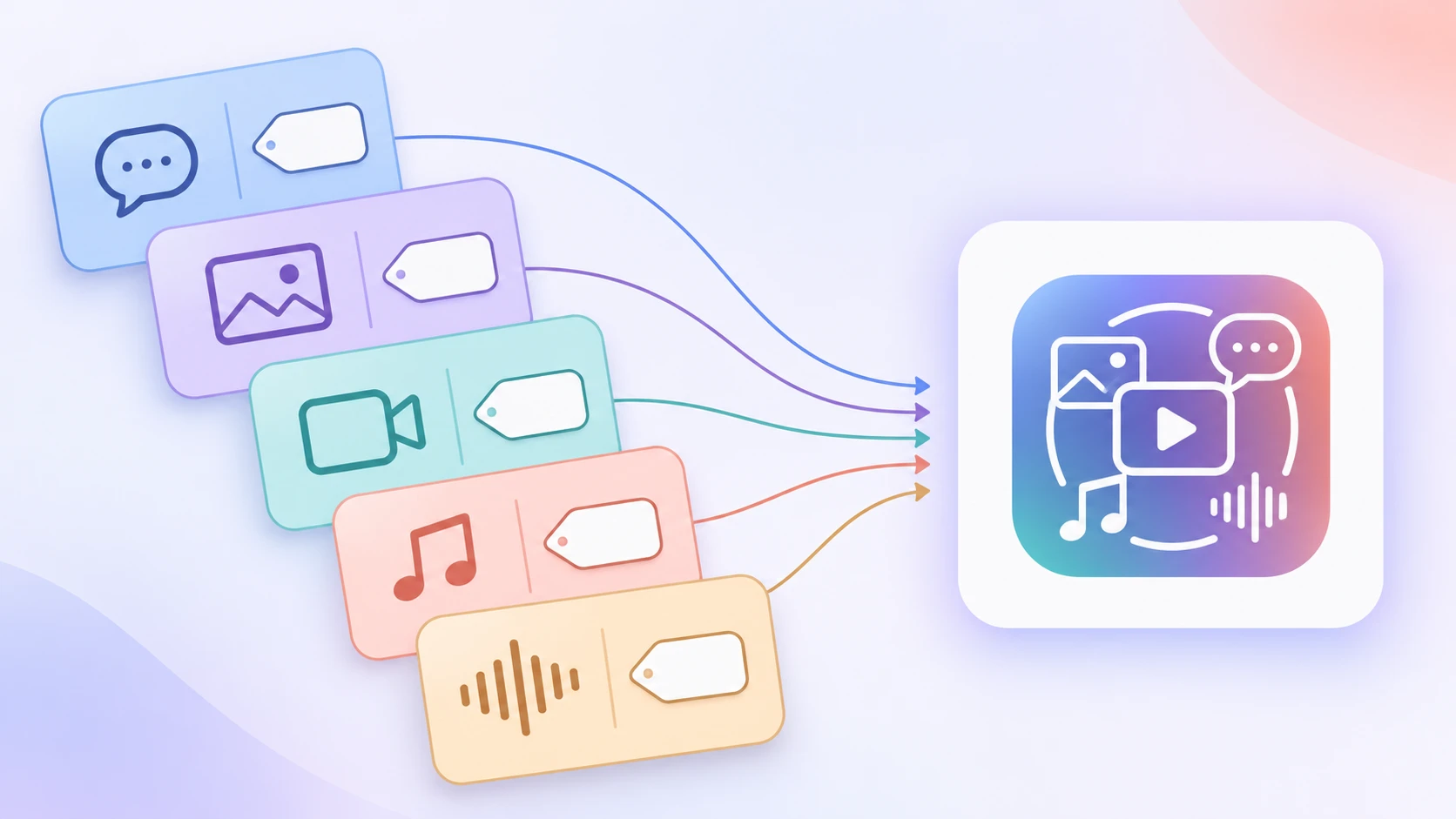
The other is consolidation. All-in-one suites bundle several creative tasks behind one subscription and one interface. Aggregators take a different route: one plan that unlocks dozens of third-party models, with a single credit balance instead of five billing cycles. Platforms like glown.ai work this way, covering text, image, video and music models behind one account, which turns trying a newly released model into a decision about credits rather than a new line on your card.
Consolidation is not automatically the answer. If a tool earns you money every day, keep it. But if your stack exists because you wanted optionality, an aggregator gives you the optionality without the sprawl.
Make the audit stick
Give every new tool the 14-day rule: a trial, one job, two weeks. At the end it either replaces an existing tool for that job, or it goes. No exceptions for "just in case."
Put a recurring 10-minute check on your calendar each quarter: statements, last-used dates, done. The AI market reshuffles monthly. Your stack should reflect what you actually make, not what launched in a given week.
FAQ
What is AI subscription fatigue?
It is the pattern of adding AI subscriptions faster than you cancel them, ending up with overlapping tools you pay for every month but use only partially. It hits freelancers and small teams hardest because nobody is checking recurring charges against actual usage.
How much do people spend on AI tools?
There is no reliable public figure for individuals, and self-reported numbers vary wildly. A full stack of flagship plans (assistant, image, video, music) adds up fast, which is exactly why your own bank statement is the only number that matters.
Is it better to have one AI subscription or several?
Let the jobs decide, not the tools: keep one tool per job, the one you actually use weekly. Consolidation starts to make sense when your deliverables regularly span multiple types, like videos that need visuals, voiceover and music.
How often should I audit my AI subscriptions?
Quarterly is enough. The first full audit takes about 20 minutes; every check after that is closer to 10.
CommunityEducation

"Let everything that has breath praise the Lord." - Psalm 150:6
Nestled within the heart of the Garden State, Newark, New Jersey, is not only a cultural melting pot but also a city that celebrates a rich tapestry of religious beliefs and practices. The diverse religious landscape of Newark echoes the Bible's call for all creation to praise the Lord, as individuals from various faith backgrounds come together to embrace their spirituality, foster unity, and honor the values that guide their lives.
A Kaleidoscope of Beliefs:
"In the same way, let your light shine before others, that they may see your good deeds and glorify your Father in heaven." - Matthew 5:16
Newark is a city where various religions coexist harmoniously, much like the light from the Bible's teachings shining before others. With a blend of Christianity, Islam, Judaism, Hinduism, Buddhism, and more, the city's religious mosaic illuminates the beauty of diversity and underscores the importance of respecting one another's faith traditions.
Worship in Sacred Spaces:
"Where two or three gather in my name, there am I with them." - Matthew 18:20
Throughout Newark, sacred spaces of worship offer places for believers to gather in the name of the divine, just as the Bible promises the presence of God when believers unite. Churches, synagogues, mosques, temples, and other places of worship serve as spiritual anchors, fostering a sense of community and providing opportunities for believers to deepen their connections with their faith and fellow worshippers.
Faith in Action:
"But someone will say, 'You have faith; I have deeds.' Show me your faith without deeds, and I will show you my faith by my deeds." - James 2:18
Newark's religious communities embody the biblical principle of faith being demonstrated through deeds. The city's believers engage in various charitable activities, social initiatives, and community outreach programs, demonstrating their faith through acts of compassion, love, and service. These faith-driven actions reflect a commitment to making a positive impact and fulfilling the teachings of their respective religious traditions.
Interfaith Dialogue and Harmony:
"Make every effort to keep the unity of the Spirit through the bond of peace." - Ephesians 4:3
Interfaith dialogue thrives in Newark, fostering unity through the bond of peace, as mentioned in Ephesians. The city's religious leaders and believers engage in conversations that bridge differences and cultivate understanding among diverse faith groups. Through these interactions, Newark becomes a model of religious harmony and cooperation.
Spiritual Growth and Learning:
"Study to show yourself approved unto God, a workman that needs not to be ashamed, rightly dividing the word of truth." - 2 Timothy 2:15
Newark's religious institutions also serve as centers of spiritual growth and learning, akin to the biblical directive to study and understand the word of truth. Houses of worship offer opportunities for believers to deepen their understanding of their faith, engage in scripture study, and receive guidance from spiritual leaders, all contributing to personal growth and a stronger connection with the divine.
Celebrating Faith Through Festivals:
"Give thanks to the Lord, for he is good; his love endures forever." - Psalm 107:1
Religious festivals in Newark are occasions of celebration, much like the psalmist's call to give thanks to the Lord. These vibrant gatherings bring communities together to celebrate their faith, share traditions, and express gratitude for the blessings in their lives. Through music, food, rituals, and prayers, these festivals highlight the city's rich religious diversity and the shared values that bind its residents.
In Newark, the tapestry of religion weaves a narrative of faith, unity, and diversity. As believers from various backgrounds come together to worship, serve, and celebrate, the city becomes a testament to the beautiful harmony that can emerge when people of different faiths embrace their shared humanity and seek to understand and respect one another's beliefs. In the heart of Newark's religious tapestry, a greater understanding of the divine and a celebration of diverse spirituality intertwine, enriching the city's cultural fabric and creating a sense of unity amidst the diversity.
-
11/13/2026
-
03/27/2025
-
08/21/2023
-
 08/16/2023
-
 08/13/2023